Another big idea? Let's build a system that keeps up with you and doesn't drop the ball.
Ideas are rarely the problem. The fun starts when they have to work with real people, spreadsheets, and decisions made years ago. I untangle that mess and build a system that runs. AI goes where it actually helps, and people stay in charge.
01 · the shop floor
My ideas used to get tested on the shop floor.
I was an art director. I'd draw the layouts and decide how everything should look. Then I'd take them to the people who actually had to make the thing and get an earful about my layouts. Sometimes in pretty colorful language.
I've loved that moment ever since: when a great-looking plan meets the people who have to make it real. These days the shop floor might be client data, a dev team, and a CRM someone already paid for. The question hasn't changed: will this actually work?
My story: from layouts to systems02 · when the stakes are higher
The obvious answer was right there. We just weren't allowed to use it.
A financial back-office specialist had to reconcile spreadsheets for the investment firms she works with. She could have dumped them into ChatGPT and asked it to sort things out. But those spreadsheets held other people's data, and she wasn't allowed to send it there.
So we started with that “not allowed.” AI helped write an app that runs on her own computer. The spreadsheets get reconciled right there, and the data never leaves her machine. Sometimes the best solution starts with the question that spoils the demo.
Read the case study03 · understand first, then build
The CRM was picked. The developers were ready to go. I suggested we first figure out what we actually needed to build.
A school founder came to me with six projects at once, a development team, and a new platform launching in a European country. Taxes, e-invoicing, data protection, and accessibility rules all shaped how the school could operate there. None of it could be solved one piece at a time.
I spent a month talking to the team and outside experts, reading documents, and learning how the school really ran. I wrote down every decision along with where it came from: whose words, which rule, which question was still open. Then I wrote tasks for the developers and checked new code against what we'd agreed. Months later, anyone could see why things were done the way they were.
Read the case study04 · what came out of it
Three systems for three very different jobs.
AI mentor
I decide what's still true. It never deletes anything old without my OK, and it asks before touching anything personal or sensitive.
School platform: every decision has a reason
The founder set the direction, and her team wrote the code. My job was to keep every important decision tied to its reason and source, and to keep development from drifting away from what we'd agreed.
Production studio
I listen to the song, decide what the video's world looks like, review the shots, and sign off on the final cut. If something misses the point, it goes back for another pass, even when it technically worked.
08 · who I am now
I still build worlds. Now they come with accounting.
In 3D, I loved setting the rules a whole world grows from. I even got to do it for real client projects. Then I moved into programming and started building tools people use at work.
Today I'm hooked on a similar question: how do you set things up so all the parts work together? You can draw a beautiful diagram, but sooner or later someone shows up with a spreadsheet, an urgent question, and completely different plans for the day. That's when you learn what your design was really worth.
How I workBring me your big idea or your digital mess.
Start with a consultation: 90 minutes on your task for ₪450. If a tool would help, we build the first piece right then and there.
05 · why I do this
My poem became a music video. And I'm still the author.
“Different Dreams” started as one of my poems. Then came the music, the shots, the assembly, the takes that didn't work, and a lot of me saying “no, that's not it.” The thrill was watching the idea go somewhere I couldn't have taken it alone, while the last word stayed mine.
That's what I want for client work too: build something that keeps working after we hang up, and leave you the power to tell it “no, that's not it.”
06 · services
You can start with one tricky task.
-
if you have one task in mind
Consultation
90 minutes on your task. Sometimes we build a tool in that time. Sometimes we find out you don't need one.
Learn more₪450 · 5 sessions for ₪2 000
-
schools, companies, and agencies
Audit
When there are several connected tasks and a whole team involved, one call won't cut it. I talk to your people, dig into processes and constraints, and tell you what to build and in what order.
Learn morepriced by scope, after a consultation
the consultation fee is credited toward the audit
-
schools, companies, and agencies
Build and ongoing support
After the audit, I either build the system myself or guide your team month by month. If you already have a plan and code, I start by getting to know the project.
Learn morepriced by scope

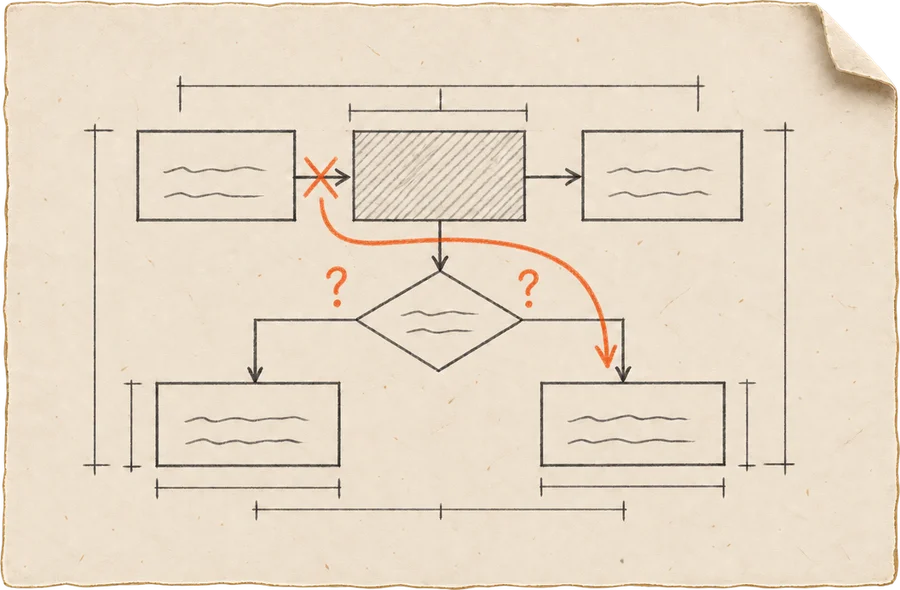

A consultation is for one task. An audit is for several connected ones and a team. I also make music videos to order – you'll find them under Services.
schools, businesses, private practices
Here's what that looks like in practice.
-
audit → ongoing support
21 decisions in a one-month audit
A school built around its founder's method · EU
A one-month audit: 21 decisions and a clear plan for what to build first
I spent a month learning how the school runs and which rules apply in its EU country. That gave us 15 findings, 21 decisions, and a first phase the team could realistically build by the deadline. Then, for two months, I wrote tasks for the team's AI agents and checked new code against the decisions people had made.
Read the case study
-
consultation package
2 programs, and she built both herself
Elena Brook · back-office specialist for investment firms
Her spreadsheets reconcile in seconds, and client data never leaves her computer
Elena handles back-office work for about ten investment firms. Other people's financial data can't go into ChatGPT, so the AI's only job was to write code, and it never saw a single spreadsheet. Both programs run on her own computer, with no calls to outside AI. And she built them herself.
Read the case study
-
done-for-you build
5 minutes instead of an hour
A stylist with her own method
The first read on a new client now takes five minutes, not an hour
This stylist has her own method: a client draws a picture, and the drawing shows how the client sees herself. Analyzing it used to take up to an hour. Now an assistant does it by the stylist's rules in five minutes, before the two of them even meet.
Read the case study
-
consultation
90% of the curriculum in 90 minutes
Asya Ch. · mother of a homeschooled student
A 28-page annual curriculum, 90% done in 90 minutes
Every year, Asya writes a 28-page curriculum in Hebrew for the Ministry of Education. It used to take her weeks, even with AI. The AI kept shrinking it down to two pages, so she had to feed it one paragraph at a time. After a 90-minute consultation, the curriculum was 90% done, and Asya kept the project folder and the instructions for the agents.
Read the case study


07 · who I work best with
I like working with people who care what happens after they hit “done.”
You can come in with a mess, some doubts, and a vague sense that “something's off.” Figuring out what is my favorite part. I'll need your materials, a willingness to talk through awkward decisions, and a real plan to use what we build.
If you just want to bolt on AI to check a box, we'll both get bored fast.